The Bill of Lading Goes Digital: What FIATA’s eFBL Means for Your Cargo
FIATA’s electronic bill of lading (eFBL) turns a paper document from 1968 into a secure digital one. What it is, whether it is legally valid, and what changes for shippers.
October 26, 2026 · 4 min read
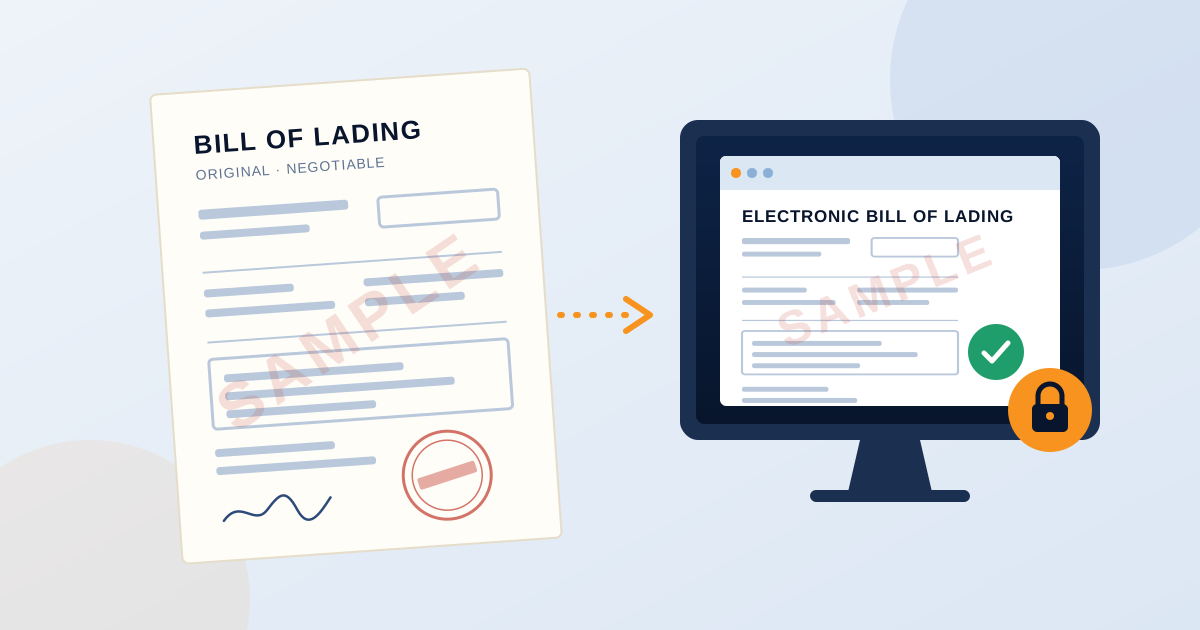
Every container that crosses an ocean still leans on a piece of paper. The bill of lading travels by courier, waits on desks and gets stamped in banks, while the cargo it describes is already at sea.
That is slowly changing. In October 2026, the FIT Alliance (ICC, BIMCO, DCSA, FIATA and Swift) published its latest global survey. The share of respondents who use only electronic bills of lading rose to 11.2%, up from about 5% in 2022 and 7.5% in 2024. Almost 94% see the electronic version as a key step toward digital trade.
One of the tools behind this shift comes from FIATA, the world federation of freight forwarders: the eFBL. Here is what it is, and what it means for the people who send and receive goods.
From FBL to eFBL
The FBL is the FIATA Multimodal Transport Bill of Lading. It was created in 1968 and is used by freight forwarders worldwide. One document can cover a whole journey: truck, ship, train and truck again.
The FBL is negotiable. Whoever holds the original controls the goods. That is why banks use it in letters of credit, and why a lost original can stop a shipment at the port.
The eFBL is the same document in digital form. The rules, the legal meaning and the commercial use stay the same. Only the paper is gone. Instead of a courier, the document moves securely from one party to the next, and only one holder controls it at a time.
Is a digital bill of lading legally valid?
This is the first question every trader asks. The eFBL is built on the UNCITRAL Model Law on Electronic Transferable Records (MLETR), a United Nations framework that lets an electronic record carry the same legal weight as the paper original.
The paper FBL already follows the UNCTAD/ICC Rules and UCP 600, the rules banks use for letters of credit. The eFBL keeps that same base.
One honest note: whether an eFBL is accepted also depends on the countries, banks and customs offices on your route. Not every jurisdiction has adopted MLETR yet. Before you switch, check with everyone in your chain.
The 2026 FIATA guide
On 1 April 2026, FIATA published a Practical Guide to the eFBL. Its aim is simple: help forwarders, carriers, banks and customs trust the digital document and start using it. The guide covers:
- Onboarding: how a forwarder starts issuing eFBLs.
- FIATA Digital Identity: a way to check that the issuer is who they say they are.
- Liability insurance: what cover an issuer needs.
- Insured eFBL: a new option developed with Willis Towers Watson and Tokio Marine HCC.
- Verification: how third parties, including customs, can check eFBL data through the FIATA API.
The eFBL also follows the data models of UN/CEFACT and the World Customs Organization, so different systems can read the same document.
What changes for shippers
What gets better
- No courier delays. The document moves in minutes, not days. Cargo is less likely to wait at the port for papers.
- No lost originals. A digital record cannot fall out of an envelope.
- Fewer errors. Data is entered once and shared, not retyped by every party.
- Easier checks. Banks and customs can verify the document directly.
What still takes time
- Banks move slowly. In the 2026 survey, only about 22% of bank respondents used electronic bills of lading, even partly.
- Platforms must talk to each other. The survey named interoperability between platforms as the top priority for the next cycle.
- Your whole chain must be ready. Shipper, forwarder, bank and consignee all need to accept the eFBL.
In short, paper will not vanish overnight. But the road is clear, and the first steps are already being taken.
Questions to ask before you switch
- Does my bank accept electronic bills of lading for my letter of credit?
- Does the receiver, and the customs office at destination, accept them?
- Which platform will issue and transfer the document?
- Who holds the document at each step, and how is control passed on?
Paper or digital, a bill of lading is a promise about your goods. At AntEX we follow these changes closely, so you can move with them when the time is right.
Have questions about the documents for your next shipment? Tell us where your cargo needs to go — we’ll find the way. Request a quote
Sources
- ICC: Electronic Bill of Lading adoption grows as focus shifts to interoperability (21 October 2026)
- FIATA: FIATA launches eFBL Guide (1 April 2026)
- PortCalls: FIATA unveils eFBL guide for paperless trade
- StatTimes: FIATA launches eFBL guide
Please note: This article is general information, not legal, banking, or customs advice. Rules and practice can change, and they differ from country to country. Always check with your bank, your trading partners, and the authorities on your route before you change how you ship.
Lawful by nature
We move what matters — within the rules of international trade. Every shipment is checked with care, and we do not handle sanctioned goods.